



The Green Sheet Online Edition
August 10, 2026 • 26:08:01
Why being known matters before the first sales conversation
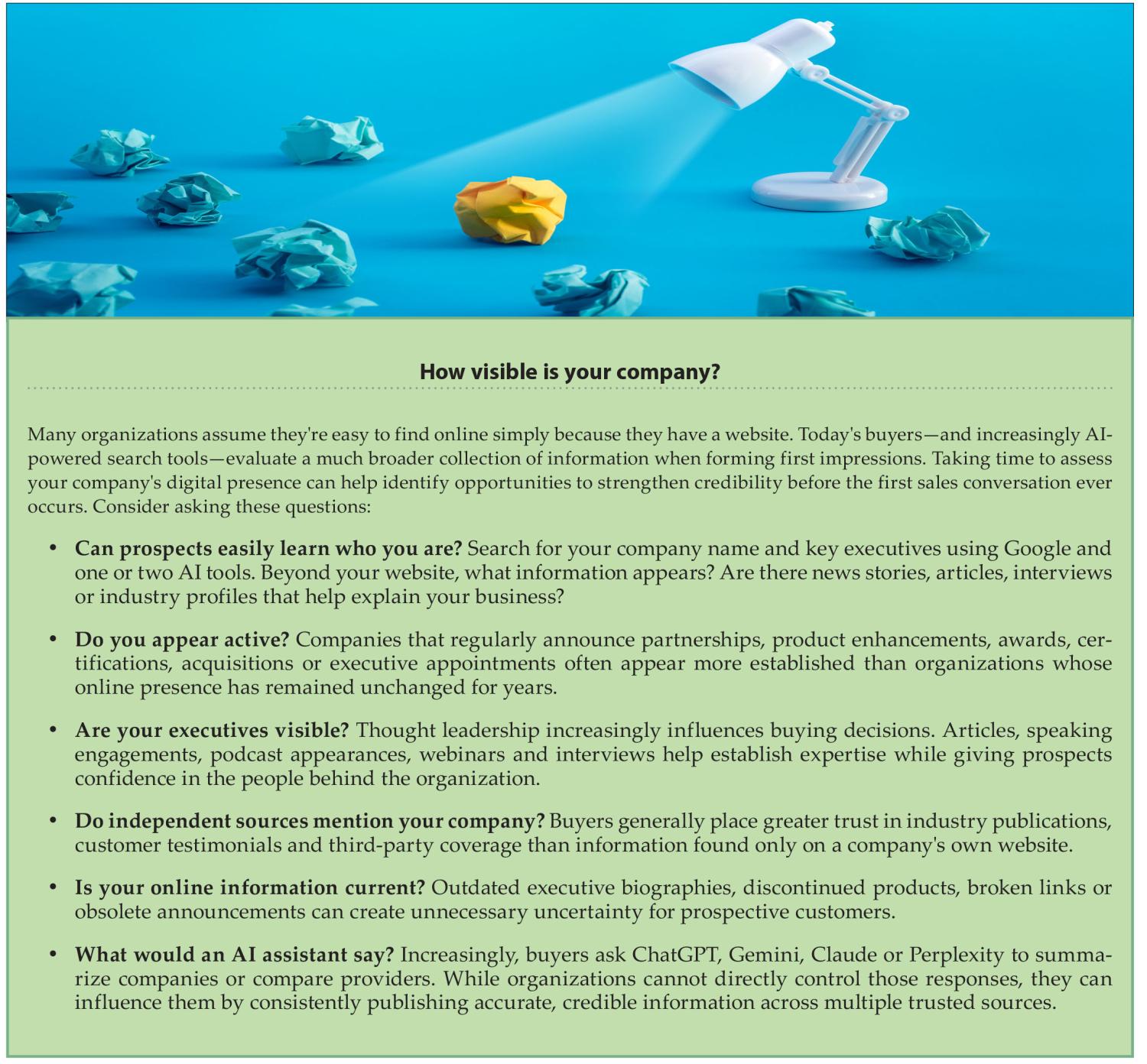
One of the biggest changes I've seen over the past few years is how much research buyers do before they ever speak with a salesperson. Whether you're running an ISO, a payments technology company, a fintech organization or a merchant services business, prospects are learning about your company and your competitors long before they reach out. They're visiting websites, reading articles, reviewing LinkedIn profiles, asking peers for recommendations, and increasingly using AI-powered tools to gather information. By the time many prospects schedule a meeting, they've already formed opinions about the companies they're considering.
In the past, companies had more control over how buyers learned about them. Today, information comes from everywhere. Industry publications, news articles, social media, online reviews, podcasts, association websites and AI-generated responses all play a role in shaping perception.
The question is no longer whether prospects can find your company. The question is what they find when they do.
This has always been important. What's changed is how much information buyers can access before they ever contact a vendor, and how quickly they can form an opinion. AI is accelerating that process, influencing how companies are discovered, evaluated and ultimately considered.
This shift is changing how companies build trust, establish credibility and earn consideration long before the first sales conversation ever takes place.
Why this matters more than ever
Gartner research (tinyurl.com/3zve635r) found that B2B buyers spend only 17 percent of their purchasing journey meeting with potential suppliers. When multiple vendors are under consideration, any individual supplier may receive just 5 percent to 6 percent of the buyer's total attention. Think about what that means for organizations in the payments industry. By the time a prospect schedules a meeting, requests a demo or responds to outreach, much of the evaluation process may have already occurred. Artificial intelligence is accelerating that trend.
To see this in action, search Google for a phrase such as "best merchant services company in the United States." In many cases, the first thing a prospect sees is not a company website. Instead, they are presented with paid advertisements, Google's Gemini AI-generated overview, comparison sites, reviews and industry content. By the time they reach traditional organic search results, they may have already formed an initial impression of which providers deserve consideration. The companies appearing repeatedly across those sources gain an advantage long before a sales conversation ever takes place.
Instead of visiting dozens of websites, a prospect can ask ChatGPT, Gemini, Claude or Perplexity to compare payment providers, summarize industry trends, identify solution categories, or explain the strengths and weaknesses of competing offerings. Those responses are influenced by information gathered from across the web. They are shaped by articles, news coverage, executive commentary, industry discussions and other third-party sources. In other words, visibility is no longer just about being found. It’s about being recognized and trusted. This creates both a challenge and an opportunity for companies throughout the payments ecosystem.
Many organizations have excellent products, experienced leadership teams and strong customer relationships. Yet when someone researches the company online, there may be very little information available beyond the corporate website. Meanwhile, competitors who consistently appear in industry publications, announce partnerships, share thought leadership and generate news coverage are creating a larger digital footprint that buyers can evaluate and trust.
Visibility creates credibility
One mistake I see companies make is assuming they need major news before they have something worth sharing. But many of the developments happening inside payments organizations can help strengthen visibility and credibility.
- A new processor partnership
- A gateway integration
- A product enhancement
- An executive promotion
- An industry award
- A customer success story
- A security certification
- Participation in a community initiative
Each of these creates an opportunity to tell a story and reinforce market presence. The companies that do this consistently often benefit in ways that extend far beyond the initial announcement. Their content gets indexed by search engines. Their stories are discovered by prospects researching solutions. Their executives become associated with expertise in specific areas. Their brands appear across multiple credible sources rather than only on company-owned channels. Over time, this creates something every organization wants: trust and visibility.
When buyers see consistent evidence that a company is active, growing, contributing to the industry and solving real problems, confidence increases. The same principle applies when AI systems evaluate information. The more credible signals that exist across independent sources, the easier it becomes for both buyers and technology platforms to understand who you are and what you do.
Practical steps for payments companies
The good news is that improving visibility does not require a massive marketing budget. It starts with being intentional.
Take an honest look at your current digital presence. Search for your company name, key executives, products, and services. What appears beyond your website? Next, identify stories that deserve attention. Many organizations have more newsworthy developments than they realize.
Ask yourself:
- What partnerships have we formed?
- What products have we launched or improved?
- What expertise can our leadership team share?
- What milestones have we achieved?
- What customer challenges have we helped solve?
These are often the stories that help establish authority and credibility in the marketplace.
Most importantly, think beyond one-time announcements. Visibility works best when it is consistent. A single article or press release may generate attention for a few days. A steady stream of announcements, insights, and thought leadership creates momentum that builds over time. The organizations that stay visible are often the organizations that stay top of mind.
Visibility creates opportunity
The payments industry continues to evolve rapidly, and so does the way buyers evaluate potential partners and providers. Long before a prospect schedules a meeting, they’re gathering information, forming opinions and deciding who deserves a closer look. Companies that invest in visibility, thought leadership and third-party credibility put themselves in a stronger position to earn that consideration.
Being known doesn’t guarantee a sale. But in today’s environment, it often determines whether you get the opportunity to compete in the first place. 
Melih ("may-lee") Oztalay is the founder and CEO of SmartFinds Marketing, a B2B marketing firm originally incorporated in 1987 and operating in digital strategy since 1994. He works with CEOs and marketing leaders to help technology, manufacturing, logistics, and professional services companies strengthen market visibility, build authority, and generate qualified demand. Melih is a published industry author, podcast guest, and speaker on marketing, buyer behavior, and the growing impact of artificial intelligence on business growth.
Notice to readers: These are archived articles. Contact information, links and other details may be out of date. We regret any inconvenience.
