




The Green Sheet Online Edition
May 11, 2026 • 26:05:01
How invisible checkout is shaping the next era of commerce
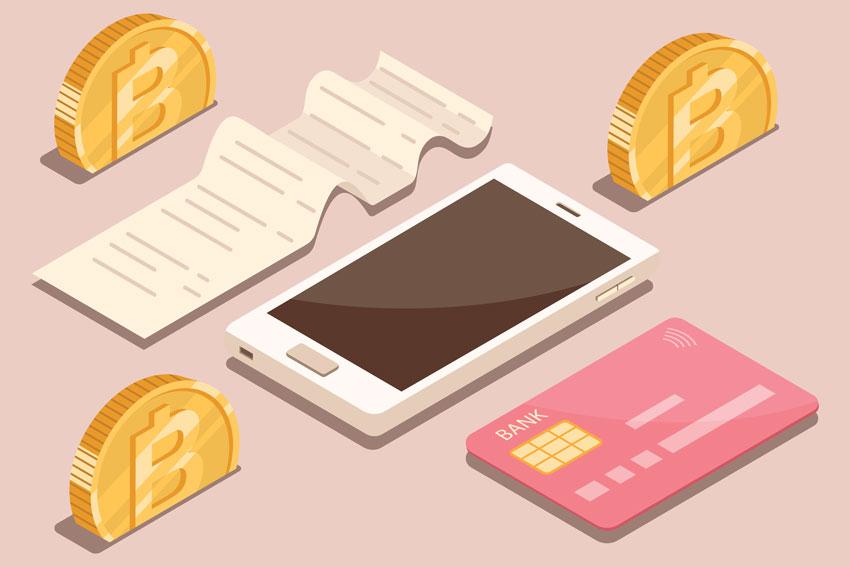
The way consumers engage with commerce is changing fast, but the most important shift is not always visible to the end user. It is happening underneath the surface, in the way payments are authorized, secured and orchestrated in real time. Consumers no longer think about checkout as a separate stage in the buying journey. They expect payments to happen instantly, securely and within the flow of the experience, whether they are shopping online, ordering through an app, renewing a subscription or interacting through an emerging digital channel. This is what is driving the rise of invisible checkout.
Invisible checkout is not simply about making payments less visible. It is about making them more intelligent, more secure and better embedded into the broader commerce experience. It reflects a wider shift in the industry from stand-alone payment events to payments that are integrated directly into digital interactions. For merchants, that means less friction and higher conversion. For financial institutions and payment providers, it means rethinking how payment infrastructure supports speed, trust and control at scale.
Tokenization as the foundation
At the center of invisible checkout is tokenization. By replacing sensitive card or account credentials with secure digital identifiers, tokenization allows payments to be processed without exposing the underlying payment data. This improves security, reduces fraud risk and supports a far smoother payment experience across channels and devices.
But tokenization is not just a security layer. It is a key enabler of modern digital commerce. At network level, tokenized credentials can be provisioned, updated and managed without interrupting the account relationship or payment flow. This supports more consistent authorization outcomes, stronger protection of customer data, and better continuity across digital wallets, merchant environments and recurring payment use cases.
For consumers, the value is simple. They do not have to re-enter payment details repeatedly, and transactions feel instant and intuitive. For issuers, acquirers and merchants, the value is deeper. Tokenization strengthens control over how credentials are used, improves the integrity of authorization and creates a more resilient framework for secure digital payments
That becomes especially important as commerce becomes more complex. Subscription models, in-app transactions, embedded payments, multi-merchant journeys and conversational commerce all require payments to move in the background without compromising security or compliance. Tokenization helps make that possible.
A new model for security and risk
Invisible checkout also changes how the industry approaches risk management. When sensitive account data is removed from the transaction flow, the attack surface becomes smaller and the opportunity for misuse is reduced.
At the same time, tokenization supports greater interoperability across the payments ecosystem. Consumers increasingly expect to move seamlessly between wallets, apps, merchants and digital channels, while still receiving a consistent and secure payment experience. Delivering that requires standardized, interoperable token frameworks combined with strong authorization controls and real-time visibility across the transaction lifecycle.
This matters because the future of commerce will not run through a single channel. It will span ecommerce, mobile, subscriptions, digital platforms, connected devices and new forms of embedded interaction. The institutions that succeed will be those that can support secure payment execution across all of them without introducing friction or losing control.
The infrastructure challenge beneath the experience
This is where the conversation becomes much more than a front-end issue. Invisible checkout may be experienced by the consumer at the edge, but it is enabled in the core. To deliver seamless payments at scale, tokenization must be deeply integrated across the full payments stack, from issuing and acquiring through to authorization, clearing, settlement, fraud controls and reconciliation. It is not enough to add token services on top of fragmented legacy systems. The underlying infrastructure must be able to support real-time decisioning, lifecycle management, compliance and processing consistency across channels.
That is why invisible checkout is ultimately an infrastructure story. The institutions that will lead in this space are those building modern payment environments that unify processing, orchestration and control rather than relying on disconnected systems stitched together over time.
Without that foundation, friction simply reappears somewhere else in the journey, whether in failed payments, poor authorization rates, weak reconciliation, higher operational complexity or gaps in fraud controls.
What this means for acquirers,issuers and merchants
For financial institutions, invisible checkout is part of a much broader strategic shift. It highlights the need to modernize core payments infrastructure so that payment experiences can become more embedded, contextual and responsive without weakening resilience or governance. This applies especially across issuing, acquiring and ledger environments, where the quality of the infrastructure determines how effectively new payment models can be supported. For merchants, the benefits are immediate and commercial.
Reducing payment friction improves conversion, lowers abandonment and makes it easier to support new forms of digital engagement. More importantly, invisible checkout opens the door to new commerce models, including embedded payments, connected services and cross-channel experiences that feel seamless to the customer. For payment providers, the challenge is to enable all of this while preserving transparency, control and scalability. That requires infrastructure that is not only fast, but unified and intelligent enough to manage the full payment lifecycle in real time.
The next era of commerce
Invisible checkout is not a niche innovation or a design trend. It is a signal of where commerce is heading. Payments are becoming embedded into experiences rather than existing as a separate destination, and that changes the role of the payment provider, the issuer and the acquirer. Success in this new environment will depend on the ability to combine seamless customer experiences with resilient, scalable and highly integrated payment infrastructure.
The winners will not simply be those that remove steps at checkout. They will be the ones that build the underlying platforms capable of delivering security, interoperability and real-time control across every transaction. That is the future of seamless payments, and it is being shaped not only by what the consumer sees, but by the strength of the infrastructure underneath.
SideNote:Tokenization 101: Why it matters in modern payments
Tokenization has become one of the foundational technologies behind modern digital payments, yet many people outside the payments industry still do not fully understand how it works or why it matters.
At its simplest, tokenization replaces sensitive payment information—such as a card number or bank account credential—with a unique digital identifier called a token. The token acts as a stand-in for the original payment credential during transactions, while the real account information remains securely stored elsewhere.
For example, when a consumer stores a payment card in a digital wallet or merchant app, the actual card number is often replaced with a token specific to that device, wallet or merchant relationship. If intercepted, the token has little or no value outside its intended environment.
Multiple advantages
This approach offers important security advantages. Since merchants and payment systems no longer need to handle or store the original card credentials directly, the exposure of sensitive data is reduced. Even if attackers gain access to a tokenized payment record, they generally cannot use it to initiate unrelated transactions.
Tokenization also supports smoother digital commerce experiences. Consumers increasingly expect payments to happen instantly and invisibly across apps, subscriptions, ecommerce sites and connected devices. Tokens make it possible to securely support recurring billing, one-click checkout and stored payment credentials without requiring users to repeatedly enter card information.
The technology has evolved significantly in recent years. Early tokenization efforts were often merchant-specific, meaning stored credentials only worked within one merchant environment. Today, network tokenization programs from major card brands allow tokens to move more seamlessly across wallets, devices and digital channels while remaining tied to underlying authorization and fraud controls.
Operational benefits
That has operational benefits for merchants, acquirers and issuers alike. If a physical card expires or is replaced, tokenized credentials can often be updated automatically behind the scenes, reducing payment disruptions and declined transactions.
Tokenization is also becoming increasingly important as commerce shifts toward embedded and background payments. Subscription services, ride-share apps, streaming platforms and connected devices all depend on payment credentials that can operate securely without interrupting the customer experience. For payments professionals, tokenization is no longer just a fraud-prevention tool. It is increasingly viewed as core infrastructure supporting authorization performance, interoperability and customer experience across digital commerce ecosystems.
As invisible checkout and embedded payments continue to expand, tokenization is expected to play an even larger role in how payment credentials are secured, managed and used behind the scenes.
Radi El Haj, RS2's CEO and executive director, has been in the payment industry for more than 25 years. Radi specializes in the areas of issuing, acquiring, clearing and settlement, ecommerce, and accounting. Colleagues and clients benefit from his international experience, global network and experience with the technical and product development units. Radi was appointed chief executive officer of RS2 in January 2013. RS2 is a leading global provider of payment technology solutions and processing services, offering a unified approach to managing payments across all channels for banks, integrated software vendors, payment facilitators, independent sales organizations, payment service providers, and businesses worldwide. For more information about RS2, please visit www.RS2.com; contact Radi El Haj via LinkedIn at https://www.linkedin.com/in/radie.
Notice to readers: These are archived articles. Contact information, links and other details may be out of date. We regret any inconvenience.
