




The Green Sheet Online Edition
April 13, 2026 • 26:04:01
Why ISOs must evolve so independent retailers can survive: A Q&A with Jay Thakkar
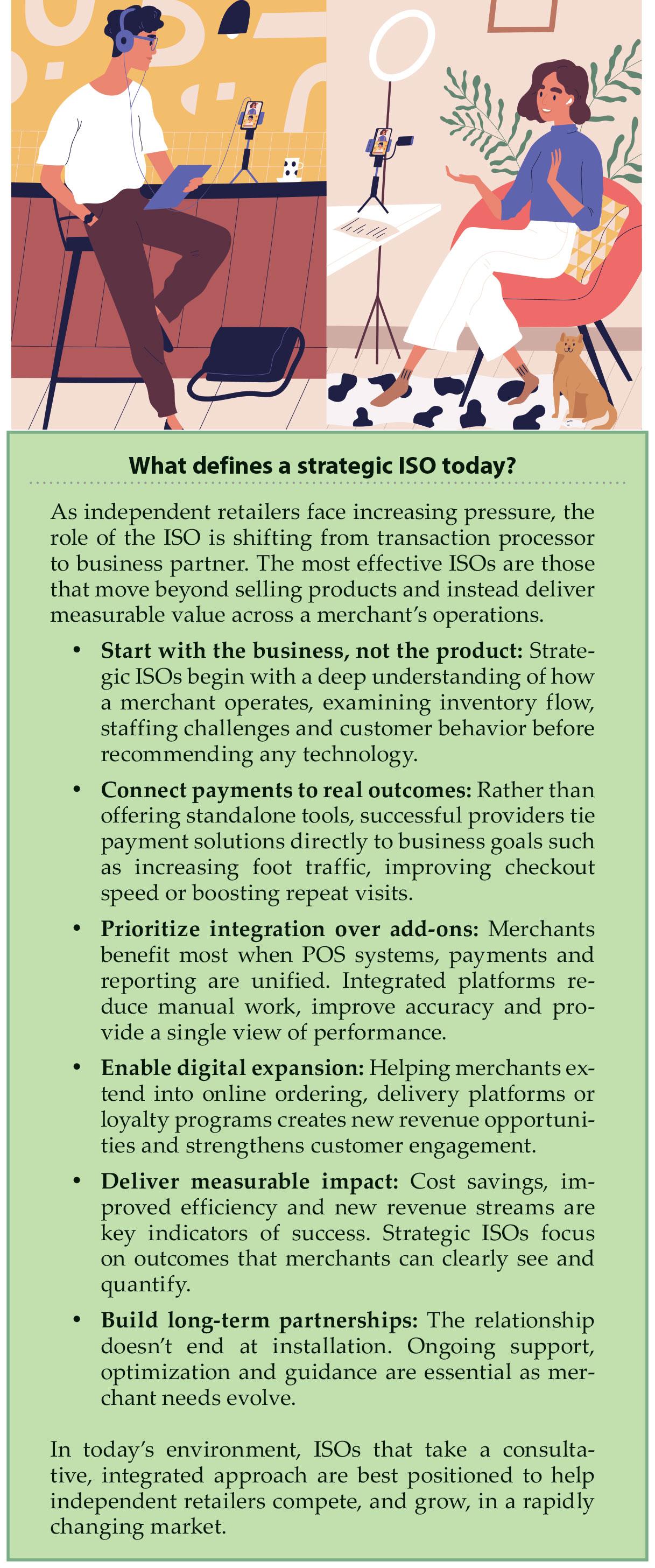
Independent retailers are navigating a rapidly shifting landscape shaped by large-scale competition and digital disruption. For ISOs, this environment is redefining what it means to deliver value—not just processing transactions, but helping merchants compete, adapt and grow.
Jay Thakkar, founder of Prosperity Pay, has built his business around that evolving role, and since establishing the firm in 2024, he has grown it from a solo operation to processing more than $10 million in annual transaction volume. He noted that his strategic partnerships with national technology leaders have been central to his success in helping merchants modernize operations without sacrificing simplicity or control.
In this Q&A, he shares how a consultative, "Merchant First" approach—grounded in real-world operational insight—can help independent retailers not only survive, but build new paths to growth.
Green Sheet: How would you describe the current state of independent retail and its impact on ISOs?
Jay Thakkar: The image of "Main Street" retail is changing faster than ever. The independent convenience store, liquor mart, and neighborhood grocery store—the lifeblood of many communities and the cornerstone of our portfolios as ISOs—are facing unprecedented pressure. They are squeezed by big-box efficiency on one side and the convenience of digital commerce on the other.
For years, our role was simple: provide the terminal, process the transaction. But in this new environment, survival for our merchants, and consequently our own growth, demands that we evolve from transaction-takers into strategic partners.
GS:What have you learned from working closely with independent retailers?
JT: In working closely with dozens of independent retailers across the country, a clear pattern emerged. The hesitation to adopt new technology wasn't about stubbornness; it was about relevance. A new payment app or a complex inventory system felt like a solution in search of a problem.
The real need was simpler and more profound: how to get customers back in the door and keep them coming back.
GS: How did that realization shape your approach?
JT: Instead of presenting a menu of disconnected tech products, we began developing customized payment strategies that tied technology directly to the merchant's daily operational reality and customer experience.
This methodology, focusing on consultative integration rather than product placement, became the foundation of our work. For a merchant juggling the headaches of daily operations—from inventory to staffing—an ISO is often the most reliable and efficient path to integration.
GS:What is the "Merchant First" framework, and how does it work?
JT: The shift from a transactional vendor to a strategic partner required more than just a change in services; it demanded the creation of a new, replicable framework for engagement.
Our "Merchant First" framework begins with a deep-dive operational audit of the merchant's business—analyzing customer dwell time, inventory mix and staffing pain points—before recommending a single piece of technology. This ensures that solutions are not just installed, but strategically deployed to solve specific operational bottlenecks.
This methodology treats the merchant's total business health as the primary metric for success.
GS: Can you walk through a real-world example of this approach in action?
JT: The true test of any methodology comes not in theory, but in practice. One of my earliest and most transformative partnerships was with Raj Patel, a family-owned operator of four liquor stores across a 10-mile radius in New Brunswick, New Jersey.
As an absentee owner trying to manage disparate systems, Raj's challenge was familiar to many in our industry: each location operated with a different POS system, a different payment terminal, and no centralized visibility into his business. His busiest store, "What A Knight Liquor," was paying approximately $2,500 per month in processing fees alone.
Rather than proposing a generic solution, I embedded myself in his operations for several days. I needed to understand not just his payment processing, but his entire business model—inventory turnover, staffing challenges, and the daily realities of his managers. This deep-dive operational audit became the blueprint for what we now formalize as our "Merchant First" framework.
GS:What solution did you implement, and what were the results?
JT: The solution we implemented was not piecemeal, but holistic. We integrated his payment processing directly with the NRS POS system, unifying his payment device, inventory management, and sales reporting into a single, seamless platform.
For the first time, Raj could monitor real-time sales, inventory levels, and staff performance from his phone or desktop—without ever visiting a location for months. This gave him back what he valued most: time and peace of mind as an owner. The financial impact was immediate and dramatic. By restructuring his processing model, we reduced his monthly fees at that single location from $2,500 to effectively zero—saving him $30,000 annually.
But we didn't stop there. Recognizing the shift in consumer behavior, we helped Raj take his business online, building a website and integrating with third-party platforms like DoorDash and Uber Eats. By connecting these digital channels directly to his unified POS, every online order flowed seamlessly into his central system. What started as zero online revenue grew to over $10,000 per month in new, incremental sales—an entirely new revenue stream born from technology integration. Today, based on the success of that first partnership, Raj and his family have entrusted us with all five of their locations, collectively saving over $10,000 per month in processing costs while powering a growing online channel.
GS: What does this case study illustrate about the ISO's evolving role?
JT: This case exemplifies the core thesis: when ISOs evolve into true strategic partners, we don’t just reduce costs—we fundamentally change the trajectory of our merchants’ businesses. The results of this approach have been tangible. By embedding ourselves in our clients’ business challenges, we’ve not only helped them stabilize but scale. One direct outcome has been the rapid growth of our own firm. In just two years, we scaled from a solo operation to processing over $10 million in annual transaction volume, a 100% year-over-year increase.
This growth wasn’t achieved in a vacuum, but by forging deep, strategic partnerships with national technology leaders. Our integration with platforms like National Retail Solutions (NRS), Shift4 and North, which power tens of thousands of independent retailers, allows us to deliver solutions that are not just add-ons, but core components of a merchant’s ability to compete and win.
GS: What does this mean for the future of ISOs?
JT: The evolution of the ISO role is critical. It requires us to understand not just interchange fees, but inventory turnover, local marketing, and the customer journey. It's a higher bar, but it creates immense value. Ultimately, the future of the ISO depends on how quickly we can identify, integrate, and deliver new and reliable solutions to guide merchants through an ever-changing landscape.
Independent merchants remain central to local economies, but their success increasingly depends on technology that is both relevant and integrated. As this example illustrates, when ISOs move beyond transactions and embrace a true partnership role, they can help merchants unlock new efficiencies, revenue streams, and long-term growth—strengthening both the businesses they serve and their own position in a changing payments ecosystem. 
Notice to readers: These are archived articles. Contact information, links and other details may be out of date. We regret any inconvenience.
