




The Green Sheet Online Edition
July 13, 2026 • 26:07:01
Street Smarts
Sizzling content marketing ideas for a successful season Part 2 - Engaging merchants in a digital-first world
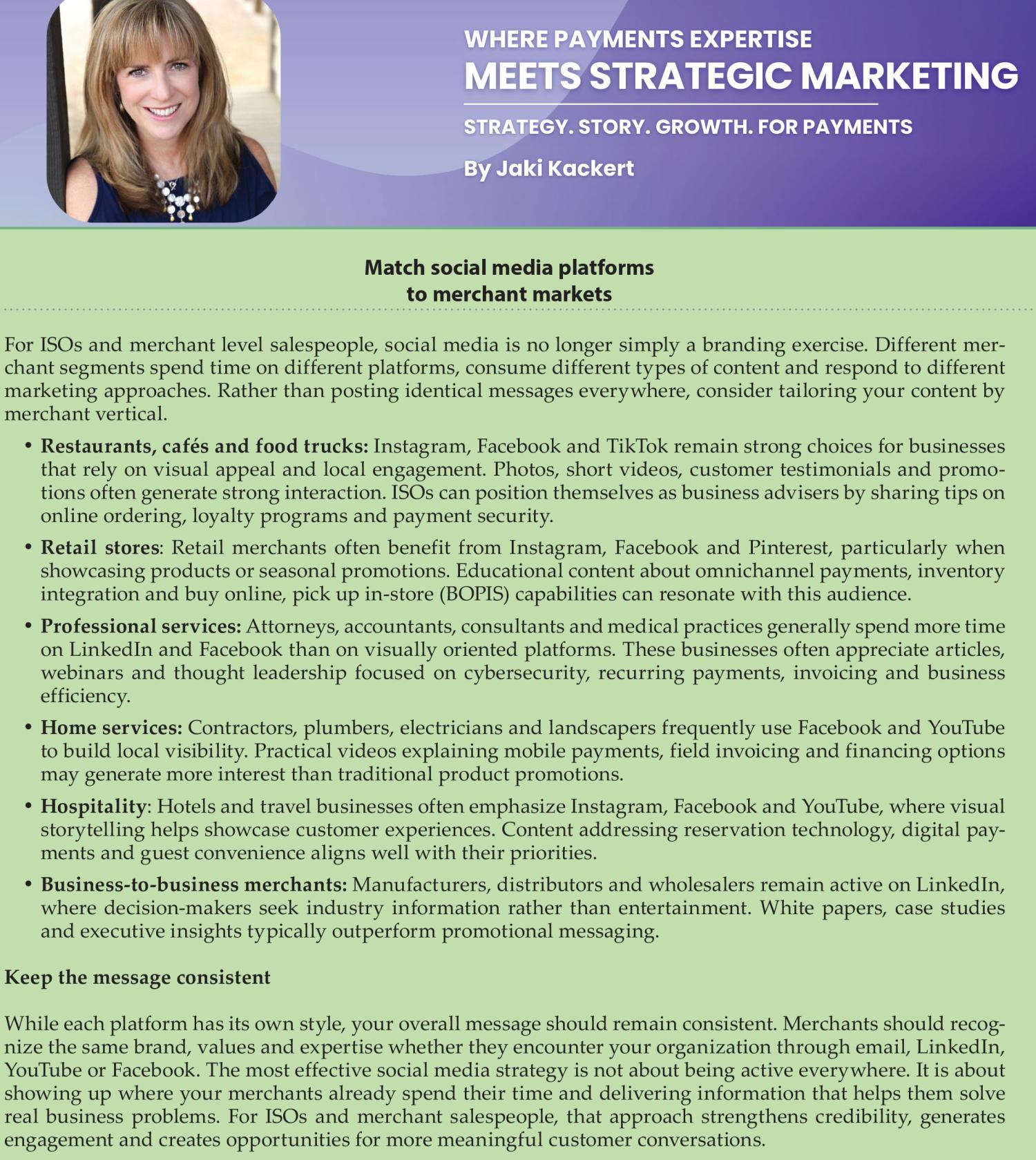
As merchants continue to adapt to changing consumer expectations, ISOs and merchant level salespeople (MLSs) must evolve their marketing strategies as well. The days of relying solely on occasional email blasts or printed newsletters are long gone. Today's merchants expect timely, relevant and personalized communication delivered through the channels they use most. The challenge is not simply creating more content; it is creating meaningful content that helps merchants solve problems, uncover opportunities and stay informed.
Marketing to meet modern merchant needs
Despite economic fluctuations and market uncertainty, marketing remains one of the most important investments an organization can make. During periods of change, merchants actively seek trusted partners who can help them navigate challenges and identify growth opportunities.This is where thoughtful content marketing can make a significant impact.
Merchants are increasingly turning to online resources for education, research and purchasing decisions. As a result, digital channels have become essential components of every marketing strategy.
Email remains one of the most effective and cost-efficient communication tools available. However, success depends on relevance and consistency. Generic messages sent to an entire merchant database are becoming less effective. Instead, organizations should focus on segmentation and personalization. By grouping merchants based on industry, business size, purchasing behavior, or product interests, marketing teams can deliver more targeted communications that address specific needs and challenges. Artificial intelligence is making personalization even more powerful. AI-powered marketing platforms can help automate email campaigns, recommend relevant content, identify optimal send times, and create more individualized customer experiences. These tools allow organizations to scale communications while maintaining an individualized touch. However, automation should enhance relationships—not replace them. Merchants still value authentic communication and human expertise.
Embrace an omnichannel approach
One of the biggest shifts in modern marketing is the rise of omnichannel engagement. Merchants do not interact with businesses through a single channel. They may read an email, visit a website, watch a video, engage in a social media post, attend an online seminar and speak with a sales representative before deciding. Successful marketing strategies recognize this behavior and create a consistent experience across all touchpoints. Social media platforms continue to evolve rapidly and offer valuable opportunities for engagement. LinkedIn remains an excellent channel for B2B thought leadership, while YouTube and short-form video platforms provide opportunities to educate and inform audiences through visual storytelling. The key is understanding where your merchants spend their time and tailoring content appropriately for each platform.
At the same time, organizations should focus on building first-party data strategies. As privacy regulations expand and third-party cookies continue to disappear, businesses must rely more heavily on information collected directly from customers and prospects. Newsletter subscriptions, online seminar registrations, surveys and customer feedback programs can provide valuable insights while helping build stronger relationships.
Consistency, credibility and connection
One common mistake organizations make is communicating simply for the sake of staying visible. Sending frequent but irrelevant messages can quickly lead to disengagement.
Instead, every communication should serve a purpose. Ask yourself:
- Does this content solve a problem?
- Does it educate or inform?
- Does it help merchants operate more efficiently?
- Does it support a business goal?
Authenticity remains one of the principal elements of successful marketing. Merchants can quickly recognize when messaging feels disconnected from reality or inconsistent with an organization's values. Marketing teams should remain focused on campaigns that align with business objectives, strengthen credibility and reinforce trust. Whether those teams are in-house or outsourced, their efforts should contribute directly to long-term relationship building.
The most successful organizations will be those that combine technology with human connection. By embracing AI responsibly, leveraging data intelligently, maintaining consistent branding and delivering meaningful content across multiple channels, organizations can create stronger merchant relationships and position themselves for sustainable growth. As the busy selling seasons approach, now is the perfect time to evaluate your marketing strategy, listen carefully to your merchants, and focus on the products, services and solutions that matter most. Those efforts will not only support success this summer but will help build lasting momentum for the seasons ahead. 
Jaki Kackert is a seasoned marketing professional with experience supporting organizations across the payments and financial services industries. Through expertise in content marketing, digital strategy, public relations, and communications, she helps ISOs and Resellers build marketing strategies that attract, retain, and grow merchant portfolios. For more information please visit www.kackertmarketing.com or reach out to Jaki at jbkackert@gmail.com
Notice to readers: These are archived articles. Contact information, links and other details may be out of date. We regret any inconvenience.
